
Case studies / Sporting Goods Ecommerce / SEO
From page three to page one: an SEO turnaround for a golf equipment retailer
3 July 2026
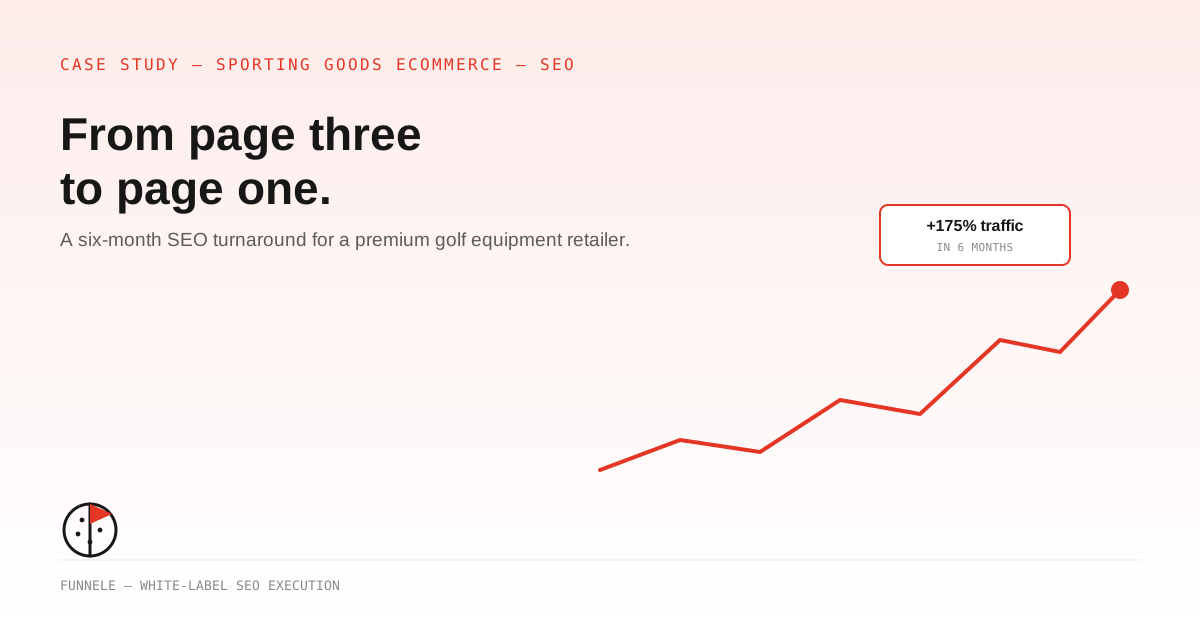
The situation
The client is a fast-growing ecommerce retailer selling premium golf equipment — clubs, wedges, irons, putters, bags, and training gear — to beginner and experienced golfers alike. The products were competitively priced. The reviews were strong. The problem was visibility: the site was effectively invisible for the searches its own buyers were typing every day.
Shoppers searching “best golf irons for beginners” or “affordable golf clubs” never saw the brand. The retailer needed a search partner who could fix that with a clear plan, and report on it every month.
The challenge
Underneath the traffic problem were five compounding issues:
- Thin category pages. Several of the site’s most important collection pages had no SEO-focused content or keyword targeting, capping their visibility for competitive searches before they had a chance to rank.
- No educational content. There was little to nothing for golfers searching buying guides, club comparisons, or equipment advice — exactly the searches that build trust before a purchase.
- A brutally competitive category. Golf equipment search results are dominated by a handful of major brands with years of accumulated authority.
- Technical debt. Slow-loading pages, duplicate metadata, broken internal links, and missing schema were all quietly capping performance sitewide.
- A damaged backlink profile. Years of low-quality, spammy backlinks had accumulated, actively working against the site’s domain trust rather than helping it.
The approach
Rather than one blended effort, the engagement ran as six parallel workstreams — each targeting a specific point of failure.
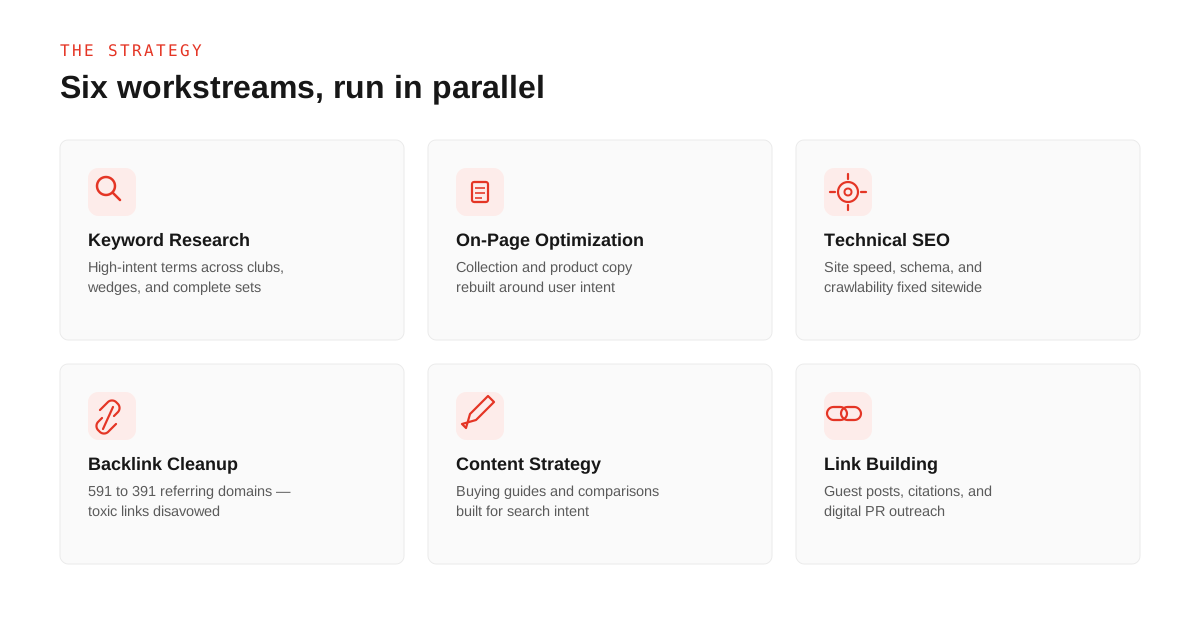
Keyword research prioritized a mix of commercial and informational terms — golf wedges, golf putter sets, complete golf club sets, golf bags for men — chosen to capture buyers at every stage of the search journey, not just the bottom of the funnel.
On-page work rebuilt meta titles, descriptions, and heading structure around real user intent, then rewrote collection and product copy to read like it was written for a buyer, not a search engine. Internal linking between blogs, collections, and products was restructured to strengthen topical relevance and make the whole catalog easier to crawl.
The technical SEO pass resolved slow-loading pages, duplicate metadata, broken internal links, and crawlability issues, and layered in schema markup for products, collections, FAQs, and reviews — the groundwork for rich results in search.
The backlink cleanup was the least glamorous work and arguably the most important: a full audit identified the toxic and irrelevant domains dragging down site authority, and a disavow file was submitted to Google to formally cut them loose.
Content strategy filled the gap the retailer’s own buyers were searching into — golf equipment buying guides, training tips, wedge and iron comparisons, and beginner equipment recommendations — built to attract high-intent, informational traffic rather than compete only on product pages.
Link building closed the loop: guest posts on golf and sports publications, niche citations and directory submissions, and digital PR outreach to rebuild the authority the disavowed backlinks had been quietly undermining.
The results
Six months in, every workstream showed up in the numbers.
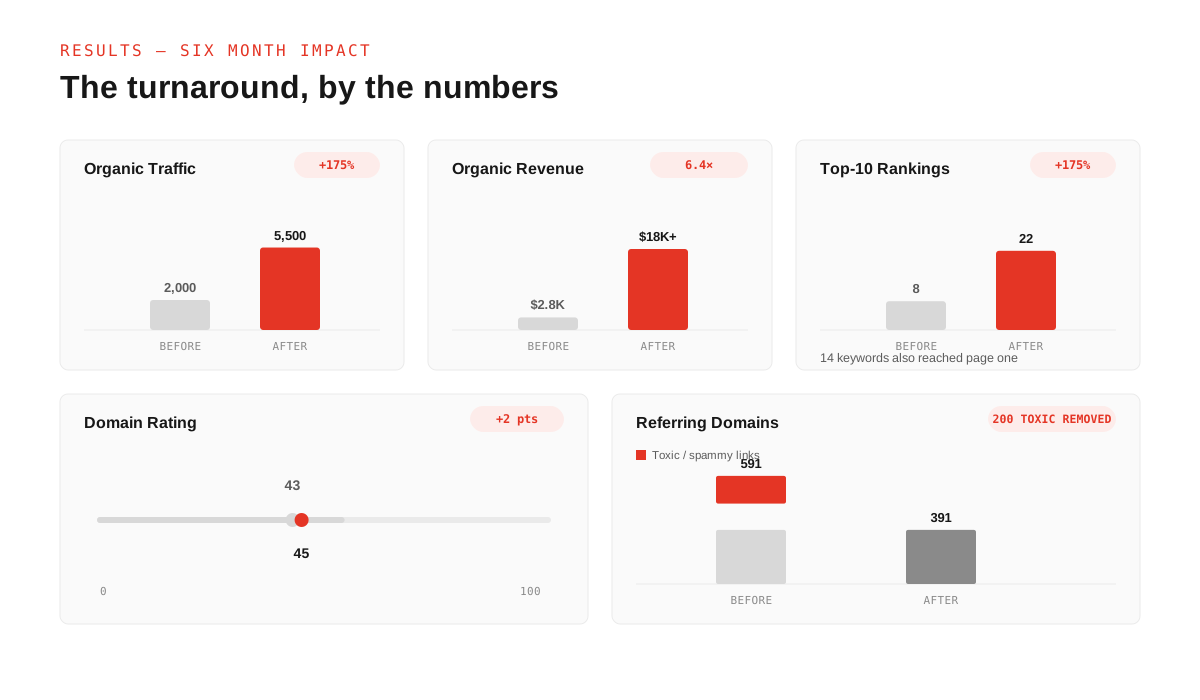
Organic traffic climbed from roughly 2,000 to over 5,500 monthly visits — a 175% increase. Top-10 keyword rankings grew from 8 to 22, with 14 keywords reaching page one entirely. Domain rating ticked up from 43 to 45, a modest but real signal of improving trust. And the backlink cleanup — which actually reduced total referring domains from 591 to 391 — removed roughly 200 toxic or spammy domains in the process, trading raw quantity for a meaningfully healthier profile.
The number that mattered most to the client’s bottom line: organic revenue grew from $2.8K to over $18K per month — more than 6x — driven by better visibility converting into purchase-ready traffic rather than just page views.
What this proves for a store like this
Golf equipment is a genuinely hard category to rank in — dominated by major brands with years of accumulated authority. This engagement shows that a structured, unglamorous approach (fix the technical foundation, clean up the backlink profile, build content for real buyer questions, then layer authority on top) can out-execute bigger competitors within a single two-quarter window, without the retailer ever needing to know a second agency was involved.
For a store owner, that’s the point: a plan you can follow, reporting you can check, and results measured against revenue.