SEO for ecommerce websites has never been more critical than it is today.
With the trend of online shopping across every platform and website, expected to cross $8.1 trillion by 2026, every ecommerce Site is fighting for one thing: visibility on search engines.
Ecommerce SEO is key to driving organic traffic, scaling online stores, and boosting conversions.
But here’s the truth-
Most ecommerce websites fail if customers can’t find them on search engines.
Even more than 44% of online shoppers are building their ecommerce business and stores on Google, not in the marketplace.

With that, your ecommerce store counts, how well you rank on search engines, how your content satisfies search user intent, and how effortlessly your pages load.
As everyone upgrades their ecommerce stores, competition is fierce. Every ecommerce Site is trying to rank with the best content strategy, faster indexing, Google updates, and product and service optimisation.
This guide will help you SEO-optimise your online store and create everything you need to build.
- Improve rankings, brand trust, and revenue leads.
- Turn product pages into a conversion source.
- Drive high traffic on the website
- Stand out in competition with organic results.
Just actionable, skilled, and expert-level functions and insights on how to do SEO for an ecommerce website.
Let’s get straight into the world of SEO for ecommerce sites and break down how to build an online store and rank with the help of Search Engine Optimisation.
What does e-commerce SEO mean?
Optimising an e-commerce website to rank higher in search engines like Yahoo, Google, and Bing is known as e-commerce SEO.
To increase visibility, e-commerce SEO focuses on enhancing category pages, product pages, Site structure, contact pages, and the entire website.
If done right, SEO turns your online store into a lead-generation, traffic, and sales engine.
Why Ecommerce SEO Matters Today?
Ecommerce websites and stores have gone into overdrive in the online shopping world. There’s no longer local competition, but it’s expanding globally. When your ecommerce store isn’t visible in customers’ search results, your leads and traffic automatically reduce.
Organic Traffic=High-Intent buyers
Users searching for products online are already aware of what they want and where to find it.
Ranking target keywords like “best beauty salons near me” or “earpods under 2000” places your product and service in front of ready-to-buy shoppers. This organic traffic converts 2.5x better than paid traffic.
Temporary and Costly Paid Ads
Advertising Ads are quick, yet not for the long term. Once your budget ends, your traffic drops to zero.
With every optimised page, SEO for ecommerce becomes a long-term investment that drives customers while you sleep.
Helps to Outrank Competitors
Even local business and ecommerce sites rank higher by optimising products, meta descriptions, internal links, technical SEO, and all website pages.
SEO reduces customer acquisition cost (CAC)
The average CPC for ecommerce keywords continues to rise annually.
SEO offers compound, sustainable growth without your ad budget.
Better User Experience
An optimised Site not only ranks better but converts your visitors into customers. Google values ecommerce websites with the best user experience, such as easy navigation, mobile-friendly content, Site speed, and scannable Site structure.
A well-strategised SEO will improve rankings, revenue, and the customer experience simultaneously.


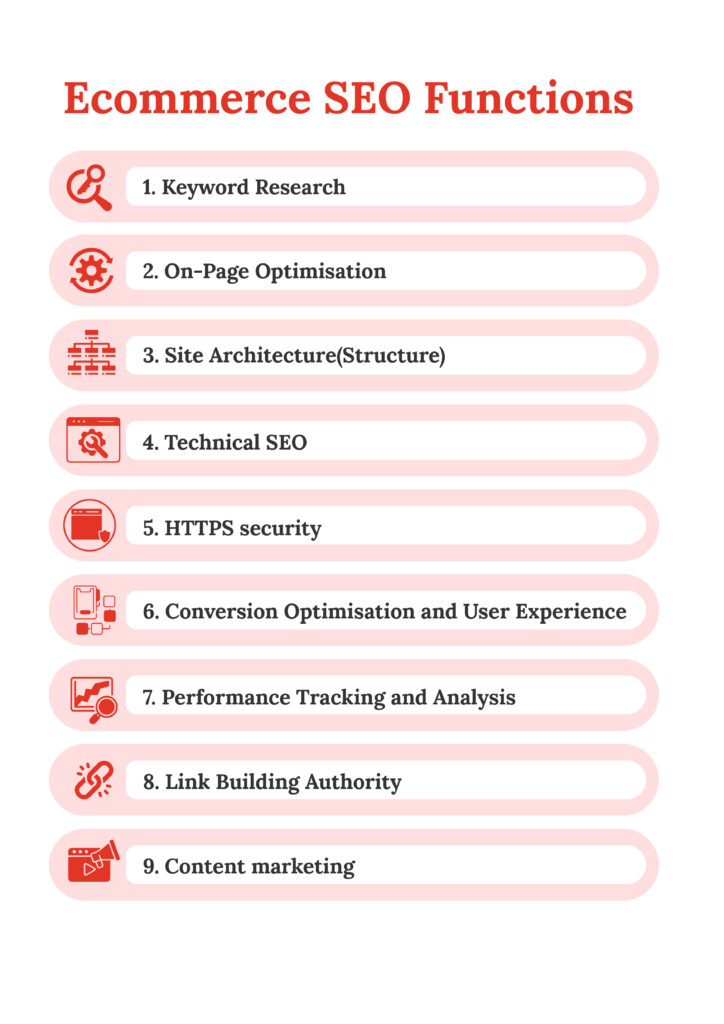
Key Ecommerce SEO Functions You Should Focus on
A thriving SEO strategy for ecommerce websites is well-planned and relies on a few key functions.
These points build strong ecommerce SEO; you need to optimise for better visibility, help customers discover your website, and improve overall conversions.
Below are the fundamental ecommerce SEO functions you should optimise for your online stores.
Keyword Research
Keyword research is the heart of every ecommerce SEO campaign. You need to identify relevant keywords that customers use to search for your products.
Types of keywords:
- Primary keywords
- Secondary keywords
- Long-tail keywords
- Related terms
- Educational keywords
Use keyword research tools for your ecommerce website to find high-volume and less-competitive keyword lists.
Match search intent with what your ecommerce store sells.
Placing keywords strategically helps you improve on-page SEO and build content that ranks.
On-Page Optimisation
On-page optimization is the most essential part of ranking ecommerce websites organically.
It optimises every single page that users land on.
Optimise every page with:
- Header Tags
- Meta Description
- Title Tags
- Product description
- Category page content
- External links
- Internal links
- Image alt-text
Every product page should include the right user-intent keywords, clear formatting, and valuable information.
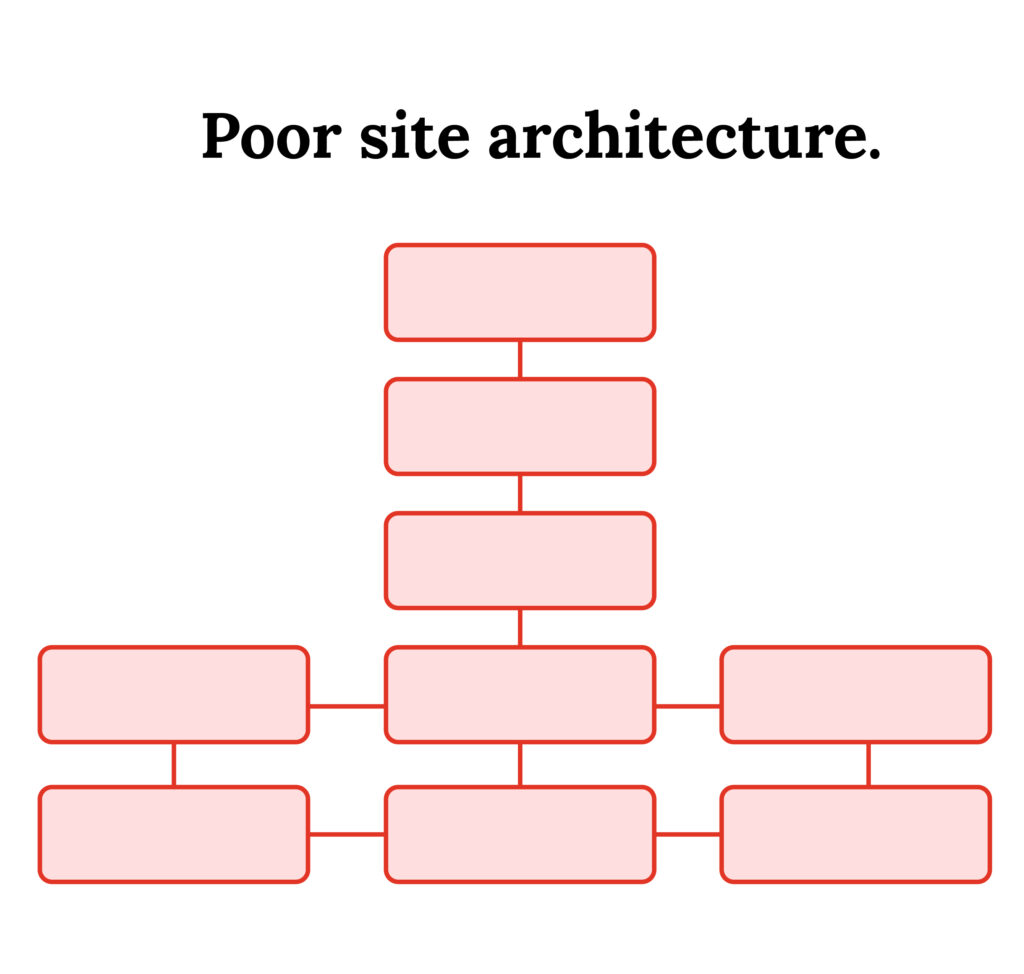
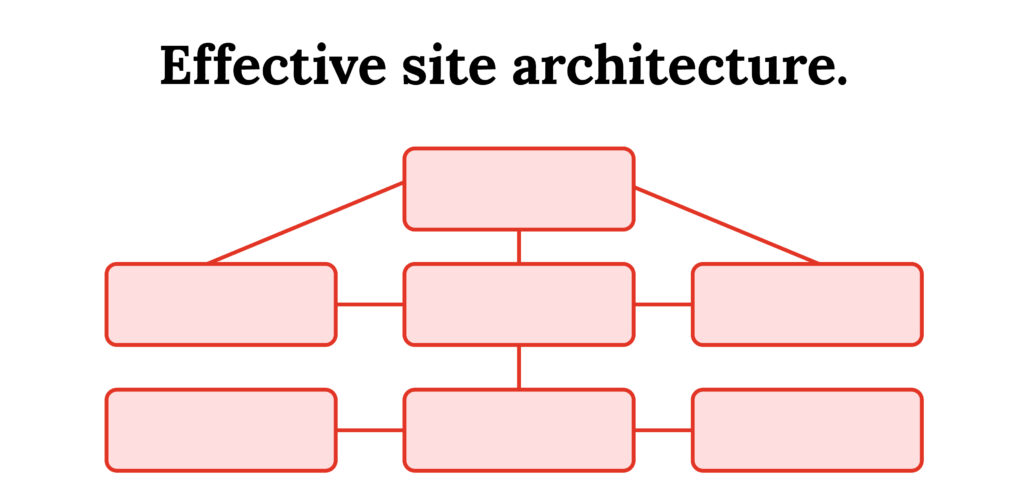
Site Architecture(Structure)
Site structure specifies how easily both search engines and users navigate your ecommerce sites.
Only when your Site is created logically and cleanly does Google index pages faster, and visitors find the product effortlessly.
Principles of a strong Site architecture:
- Avoid duplicate content
- Organise category pages clearly (product pages)
- Keep all pages within three clicks of the homepage.
- Use breadcrumbs
- Add internal links
A clean, scannable, and easy-to-visit structure improves SEO for ecommerce websites and performs smoothly across all product pages.
Technical SEO
Technical SEO ensures that search engines can index and crawl your e-commerce Site without any technical issues.
Key areas to focus on:
- Mobile responsiveness
- Clean URLs
- Fast Site speed
- XML sitemaps
- Structured data
- Fixing broken links
- No index and canonical tags
HTTPS security
Without these technical problems, your ecommerce website can improve its ranking, remove roadblocks, and crawl efficiently.
Conversion Optimisation and User Experience
SEO for ecommerce sites goes beyond rankings. User experience influences visitors to stay, click, and convert.
Essential factors for User Experience:
- Clean product pages
- Easy navigation
- Clear CTAs
- Mobile-friendly design
- Fast loading
With a better user experience, you can reduce bounce rates and increase conversions, which helps search engines trust your ecommerce Site more.
Performance Tracking and Analysis
To improve your eCommerce SEO strategy, you need reliable data and experiments with different content.
Tracking performance helps you understand these points:
- What keywords bring traffic
- Where users drop off
- What page ranks
- Best time to publish and update content
Essential analytical tools include:
- SEO ecommerce platforms
- Google Search Console
- Google Analytics
- Best SEO tools like SEMrush, Ahrefs.
Tracking and analytics help you refine your strategy and achieve goals with a consistent growth plan.
Link Building Authority
Link building strengthens the authority of all pages of the ecommerce website in the eyes of search engines.
High-quality backlinks tell Google that your ecommerce store is trusted.
Best link-building strategies include:
- Resource page link outreach
- Guest posting
- Industry partnerships
- PR campaigns
- Broken link outreach
- Influencer collaborations
A steady stream of high-quality backlinks enhances the authority of product, category, and blog pages.
Content marketing
Content marketing supports your Ecommerce website by bringing commercial and informational traffic.
Practical content to include:
- Product guides
- Blog posts
- Tutorials
- SEO optimised landing pages
Marketing original content builds authority, ranks for relevant keywords, and generates traffic on every stage of the buyer journey.
Ecommerce SEO Ranking Factors You Need to Know
Every ecommerce store wants to rank on search engines; for that, Google evaluates hundreds of signals.
For SEO ranking, you need to understand its factors to build an e-commerce SEO strategy that enhances visibility, conversions, and traffic.
Below, mention the most critical ecommerce SEO ranking factors every online store needs to know.
Strong Website Structure
A clean, clear structure improves user experience and indexing, which helps search engines crawl your ecommerce Site.
Best practices contain:
- Clear category pages
- Proper internal links
- Logical navigation
- Avoiding broken links
- Minimal clicks to reach products
Effortless architecture supports ecommerce websites and helps visitors explore products without any confusion.
High-quality content on product pages
Success for SEO for ecommerce websites that publish accurate, complete and helpful content in product and category pages.
Your product pages must include:
- Relevant keywords
- Helpful comparison
- High-quality images and alt-text
- Unique product features
- Clear descriptions
Over 60% of ecommerce sites suffer from ranking issues because of duplicate content on product pages.
The depth of your organic content enhances your chances of ranking in search engine results.
Updated Content
Search engines prefer ecommerce sites that stay active and keep their content fresh. Update their blog posts, category pages, and product descriptions to keep them relevant.
Regular updates show that Google, your ecommerce Site, is maintained trustworthily.
On-page elements (metadata)
On-page SEO is essential for ranking product and category pages. Search engines rely on metadata to understand page content.
Here are key points for on-page optimisation:
- Meta descriptions
- Title tags
- Image alt-text
- External/Internal links
- Header tags
- URL structure(snippets)
Page Speed and Core Web Vitals
The Site speed is one of the most vital ranking factors for ecommerce SEO. It slows down website ranking and loses customers.
Search engines load quickly and perform well on mobile devices.
You must optimise:
- JavaScript
- Code Structure
- Images Sizes
- Code structure
- Server performance
Fast page speed reduces bounce rates and increases conversions.
Even a 1-second delay can reduce ecommerce conversions by up to 7%.
High-Quality Backlinks
Backlinks act as votes of trust for your ecommerce sites. Google sees your store online and considers your content authoritative when it finds a reputable website link to it.
You can build links through: PR mentions, Guest posts, Influencer collaborations, Valuable blog posts, and other product pages.
User Engagement and Behaviour Signals
Google tracks how users interact with your ecommerce Site. Positive engagement boosts rankings.
Important engagement metrics include:
- Bounce rate
- Page per session
- Time spent on the page
- Conversion rate.
More engagement on your ecommerce Site means your SEO strategy is perfectly aligned with user intent.
Browsing with HTTPS
Security is a mandatory ranking factor while browsing.
Ecommerce websites must contain HTTPS to protect user data.
Google turns to secure ecommerce stores because they provide a safe shopping experience for users.
Rich results and Schema Markup
Schema markup enhances your ecommerce Site appearance in search results.
It helps Google to understand products in detail, like:
- Reviews
- Ratings
- Price
- Availability
These rich results improve click-through rate and drive traffic to your ecommerce store.
These search engine ranking factors shape how to evaluate your ecommerce sites.
When you optimise content quality, Site speed, architecture (structure), user experience, and so much more, you build a strong foundation for long-term SEO and ecommerce Site performance.
Practical Checklist: How to Optimise Your Ecommerce Website
The practical checklist for ecommerce SEO helps optimise the ecommerce website at every stage of the funnel.
This checklist contains every single detail to develop a pragmatic approach to an ecommerce Site strategy.
Follow every step and point carefully to build a high-performing SEO for an ecommerce Site strategy.
Keyword Research Checklist
- Search primary product keywords.
- Find category-level keywords.
- Collect long-tail transactional keywords.
- Map keywords to product and category pages.
- Ensure keywords match search intent.
- Use tools for search volume and keyword ideas.
- Add keywords naturally across pages.
- Ecommerce keyword research ensures every page targets the right audience.
On-Page SEO Content Optimisation Checklist
- Add target keywords in title tags.
- Write a persuasive copy of the meta description.
- Use H1, H2, and H3 headings in the website blog.
- Insert image from a well-sourced platform.
- Use alt-text for the image.
- Add Internal/External links.
- Remove duplicate content.
- Use clean and descriptive URLs.
On-page SEO assists the search engines in knowing about your ecommerce Site better.
Product Page Optimisation Checklist
- Add detailed product descriptions.
- Upload high-quality images.
- Include benefits, features, and specifications.
- Display reviews and ratings.
- Optimise image names and alt-text.
- Use clear CTAs.
- Improve loading speed
- Add FAQs
Well-optimised product pages support your ecommerce SEO strategy and increase conversion rates.
Each Product Page Optimisation Checklist
- Add relevant keywords
- Write short introductions
- Improve content depth
- Create filter options
- Use structured headings
- Ensure clear navigation
- Add breadcrumbs
For the product(category) pages, rank for high-volume searches and drive organic traffic.
Technical SEO Checklist
- Compress large images
- Improve Site speed
- Enable browser caching
- Fix broken links
- Submit XML sitemap
- Add structured data
- Use HTTPS
- Ensure mobile-friendly design
- Fix duplicate URLs with canonical tags.
- Optimize robots.txt
Technical SEO keeps your ecommerce sites healthy and crawlable, making them easy for the target audience to reach.
Site Architecture Checklist
- Keep products within three clicks from the homepage.
- Use a simple navigation hierarchy.
- Add breadcrumb navigation
- Connect product and category pages with internal links
- Avoid deep or confusing folders.
- Keep products within three clicks from the homepage.
- Improve Site architecture for both users and search engines
Content marketing checklist
- Write buying guides
- Create blog posts targeting relevant keywords
- Write comparison articles
- Add FAQs for common customer questions
- Keep content updated
- Build content hubs for major product categories.
- Publish how-to tutorials
Content marketing supports your ecommerce SEO campaign and boosts organic traffic.
Backlink and Authority Checklist
- Create link-worthy content
- Reach out for guest post opportunities
- Build PR mentions
- Use influencer collaborations
- Fix broken backlinks
- Track backlink quality
- Earn links to product and category pages
Backlinks improve authority and SEO for ecommerce websites.
Tracking and analytics checklist
- Connect Google Search Console
- Track keyword rankings
- Monitor page performance
- Connect your ecommerce website to Google Analytics
- Track conversions and revenue patterns
- Analyse top-performing content
Analytics help you adjust and improve your ecommerce SEO strategy consistently.
User Experience Checklist
- Simplify navigation
- Improve page loading time
- Make checkout smooth
- Keep design clean and modern.
- Use mobile-friendly and responsive layouts
- Test page layouts regularly
A better user experience increases rankings and conversions.
Regular Maintenance Checklist
- Refresh outdated content
- Update product descriptions
- Remove discontinued product pages or redirect them.
- Add new keywords where relevant.
- Check for broken internal links
- Fix technical errors
- Perform monthly SEO audits
Regular optimisation ensures your ecommerce Site remains competitive and brings the latest information to the audience and readers.
This practical checklist provides you with the entire process and a step-by-step plan for your ecommerce Site.
To optimise your online store in terms of visibility, conversions and rankings.
Your ecommerce SEO is organised, effective, and scalable because you consistently follow every point on the checklist.
Common Challenges in Ecommerce SEO
Ecommerce SEO can be highly fulfilling, but it also comes with its own challenges. SEO works on technical, emotional, and psychological levels for online stores.
To avoid common mistakes that prevent your ecommerce website from running well on search engines.
Here are some of the main challenges most ecommerce stores face:
Thin Product Pages
There are thin product pages, which hurt SEO for ecommerce websites. As SEO demands, be helpful and knowledgeable, and provide detailed solutions and information to the target readers.
Slow Page Speed
Slow load times lead to visitor and ranking losses for ecommerce sites.
Studies say that 53% of mobile users abandon pages that take longer than 3 seconds to load any page of the website.
Speed issues often come from:
- Poor hosting
- Large Images
- Excessive scripts
Improving page speed enhances both user experience and SEO.
Duplicate Content Issues
Most ecommerce sites face duplicate content issues.
There are many reasons for this, such as:
- Similar product descriptions from manufacturers.
- Pagination on category pages
- Multiple product variations
To fix this issue, use canonical tags, write unique product descriptions, and optimise your category pages.
Mobile Optimisation Challenges
Much of the ecommerce traffic comes from mobile devices. If the Site isn’t created as mobile-friendly, it suffers a low ranking.
For better, higher bounce rates and better SEO, focus on Fast mobile load times, easy-to-click buttons, and scroll-friendly layouts.
Managing Product Variations
Ecommerce stores often offer multiple product variations, such as styles, themes, colours, or sizes.
This can lead to Indexing issues and Duplicate content.
Use structured data and canonical tags to avoid conflict and reduce SEO value.
Frequent Inventory Changes
Old pages may lead to broken links or a loss of authority. Frequent product removal and addition can disrupt SEO for ecommerce stores.
This solution includes updating links and conducting regular Site audits.
The common challenges to improving your ecommerce SEO strategy. Addressing Site issues, technical SEO, Site structure, and analytics will help your ecommerce store to rank higher and maintain long-term visibility.
Metrics to track ecommerce SEO performance
Analysing your ecommerce SEO website success is key to understanding what works and what needs improvement.
Here are the proper metrics to track your ecommerce website strategy.
Keyword Positions
Tracking keyword rankings for understanding how well your ecommerce website ranks for target searches.
Track product page keywords, discover which keywords are ranking higher or lower in search engine results, and monitor both short-tail and long-tail keywords.
Keyword positioning ensures your pages are optimised for the right target keywords.
Organic Traffic
Organic traffic shows how many users visit your ecommerce Site through search engines.
This is important because it shows SEO for ecommerce Site visibility, helping one identify which product pages are top performers and which pages attract the most visitors.
Revenue Growth
It sets the benchmark for ecommerce SEO as :
- Converting visitors into buyers.
- Track sales from organic traffic.
- Study conversions from top-performing keywords.
- Measure revenue per product page.
With ecommerce platforms, you can link SEO directly to business growth.
CTR & Bounce Rate
Click-through rate (CTR) tells you how many people are clicking on your listing in SERPs.
On the other hand, Bounce rate shows the percentage of users leaving after viewing a single page. A lower bounce rate means a good user experience, helping an ecommerce store to rank on Google’s First page.
Monitoring those metrics helps you to refine your ecommerce SEO campaign over time.
Best Ecommerce SEO Tools & Resources
From keyword research to SEO audits, these resources help ecommerce stores attract organic traffic, boost revenue, and improve rankings.
Here are the best ecommerce SEO tools and resources to consider:
Google Search Console
Google Search Console (GSC) enables your Site’s appearance on Google, having the following key features:
- Identity indexing issues
- Track keyword impressions and rankings
- Investigate click-through rates for search results
- Monitor backlinks
GSC is a must-have tool for any ecommerce store to ensure your pages rank and are indexed perfectly.
Google Analytics
Google Analytics is essential for tracking ecommerce SEO performance, and its benefits are:
- Identity top-performing product pages
- Track conversions and revenue
- Monitor organic traffic
- Study user behaviour on your ecommerce website
Google Analytics helps to make smart, data-driven decisions.
SEMrush Tools
SEMrush is another top-tier tool for performing strong SEO campaigns, such as:
- Site audits for technical SEO
- Content gap identification
- keyword research and tracking
- Competitor analysis
It helps you monitor SEO performance and discover growth opportunities every time.
Yoast SEO
Yoast SEO is a popular SEO plugin for WordPress ecommerce sites.
It allows:
- Generate XML sitemaps
- Improve readability and keyword usage
- Optimise title tags and meta descriptions.
It also integrates with Google Search Console to support an effective SEO strategy.
Ahrefs
Ahrefs is a powerful tool used for advanced ecommerce SEO optimization, including:
- Audit your website for SEO issues
- Find high-volume and low-competition keywords
- Analyse competitor backlinks
- Track keyword positions and organic traffic.
Ahrefs helps to uncover the best opportunities to grow organic visibility.
Hotjar/Crazy Egg
These tools track user behaviour on your ecommerce website and use it for better SEO, like:
- Monitor user scrolls
- Identify obstacles in checkout or navigation
- Analyse heatmaps and click patterns
These tools help improve UX (User Experience), which is critical for SEO in online stores.
These resources help you stay up to date with trends and implement best practices to optimise SEO for your business sites.
Conclusion: Crafting a Winning SEO strategy for your ecommerce store
The SEO for ecommerce sites is the foundation for visibility, traffic, and revenue growth in an ever-competitive digital market.
An effective SEO ecommerce website enables your online store to attract high-intent customers, enhance the shopping experience, and maximise long-term conversions.
With this ecommerce SEO guide, best practices in mind, and the right tools, your ecommerce store will be able to emerge in search engine pages, surpass the competition, and find a loyal customer base.
Begin now, be consistent, and see your ecommerce Site skyrocket into a high-ranking, high-converting online store.